


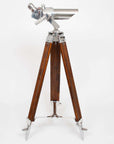
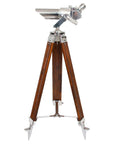
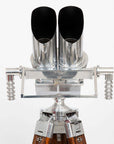
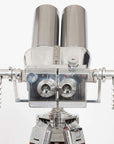
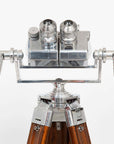
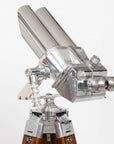
WW2 German 10 x 80 Binoculars
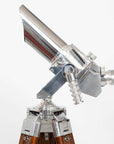
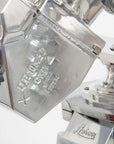
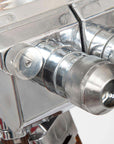
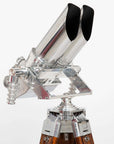
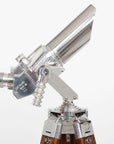
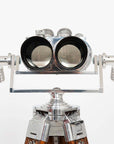
German WW2 era 10 x 80 Binoculars: These Emil Busch Binoculars were primarily used by Luftwaffe Flak Artillery ground crews for spotting and identifying enemy aircraft and directing the crew served Rangefinders, Searchlights and Flak Cannons of the Anti-Aircraft batteries based around many German and occupied ports, cities and industrial centres. Due to their superb optics they naturally also proved useful on the battlefield for tactical observation and from the outset of 1939 were used in many theatres of war by the German Army. Presented here are an great set of binoculars, manufactured by Emil Busch bearing the marker of 'CXN 10 x 80' , CXN being the wartime supplier code for Emil Busch . They have exceptional optics with the 10 indicating the degree of magnification and the 80 indicating the 6 cm optic width. They have been professionally stripped, restored and serviced before being hand polished and mounted on a modern and bespoke high quality cradle of polished metal and wood, fully adjustable tripod stand. Specification approx: Arms 33cm, Binocular 22cm high , 48cm long , 45cm wide, stand adjustable from 130cm to 180cm.

Estimated delivery time 2 to 4 days
Key Details
Emil Busch
Wartime Supplier Code CXN
Germany
Luftwaffe Flak Artillery
1930–1939
World War II Era
Original; Fully Restored
Excellent Condition
Professionally stripped, restored, and serviced, then hand polished.
Aluminium, Wood
Silver Polished Aluminium Finish
Mounted on a bespoke cradle of polished metal and wood.
51.19 × 13 × 18.9 in
Height × Width × Depth
Binocular approx. 22 cm high, 48 cm long, 45 cm wide. Arms 33 cm. Stand adjustable from 130 to 180 cm.
Marked "CXN 10 x 80," with 10x magnification. Used for spotting and identifying enemy aircraft, and for directing the rangefinders, searchlights, and flak cannons of anti-aircraft batteries.
Mounted on a modern, bespoke cradle with a fully adjustable tripod stand.
Authentic Wartime Optics, Not Reproductions
Original period engineering with its wartime markings intact. The real object, in a market flooded with replicas.
150 Hours of Swiss Watchmaker Restoration
Fully opened, inspected, and revived. Every prism hand polished and microscopically finished to tolerances measured in fractions of a human hair.
Restored as a Working Instrument
A clear, comfortably merged image through both barrels. Built to be used, not displayed as decoration.
Nine Months to Complete
Multiple original WWII donor sets were used to bring this instrument back to life. Over those nine months, original glass, prisms and the markings plate were sourced to replace damaged or missing parts. Often disassembled again after it performs perfectly, not because it failed, but because it can still be refined.
One Serial Number in the World
Original markings make every piece historically rare. No one else in the world owns this exact instrument.
Appreciating as Scarcity Accelerates
Most originals never survived to be collected, meeting their fate at the bottom of the sea and on lost battlefields. The remaining few are disappearing into private collections while demand climbs.

It's all in the details


